Surf guide / Equipment

How to buy a used surfboard without nasty surprises

A good second-hand board saves money, but a bad one gets expensive fast. Take this checklist with you and inspect the board calmly, preferably in daylight.

Surf guide / Equipment

Before you go and see the board

Asking questions first saves wasted journeys. Ask how long the board has been used, whether it has been repaired, who repaired it and how it was stored, because sun and a hot car ruin any board. Ask for photos of the deck, bottom, rails, tail and nose. An advert with few photos, or only distant ones, deserves suspicion.

Know what you are looking for too: type, size and volume for your level. Our guide on how to choose a surfboard can help. Buying a good-looking board that is wrong for you is the most expensive mistake, more than any ding.
Dings, cracks and repairs

Run your hand slowly over the whole surface. Pressure dents where you stand are normal with use, but if the surface gives way or creaks, the fibreglass layer may be weak. Look for cracks, especially around the fin boxes, the leash plug and the nose.

Good repairs are not a problem; what matters is that they are firm, smooth and free of bubbles. Also check the colour: yellowish or dark patches can mean water has got into the foam.

Delamination and soft spots

Delamination is the separation of the glass layers from the foam. It shows up as bubbles or ripples and feels hollow or spongy underfoot. Press with your thumb in several places, including under the back foot and around the chest area. If there are soft spots, the board has already lost stiffness.

A musty or damp-foam smell near the plug suggests water has entered. A waterlogged board gets heavier and eventually falls apart, so when in doubt, move on to the next advert.

Fins, boxes and leash

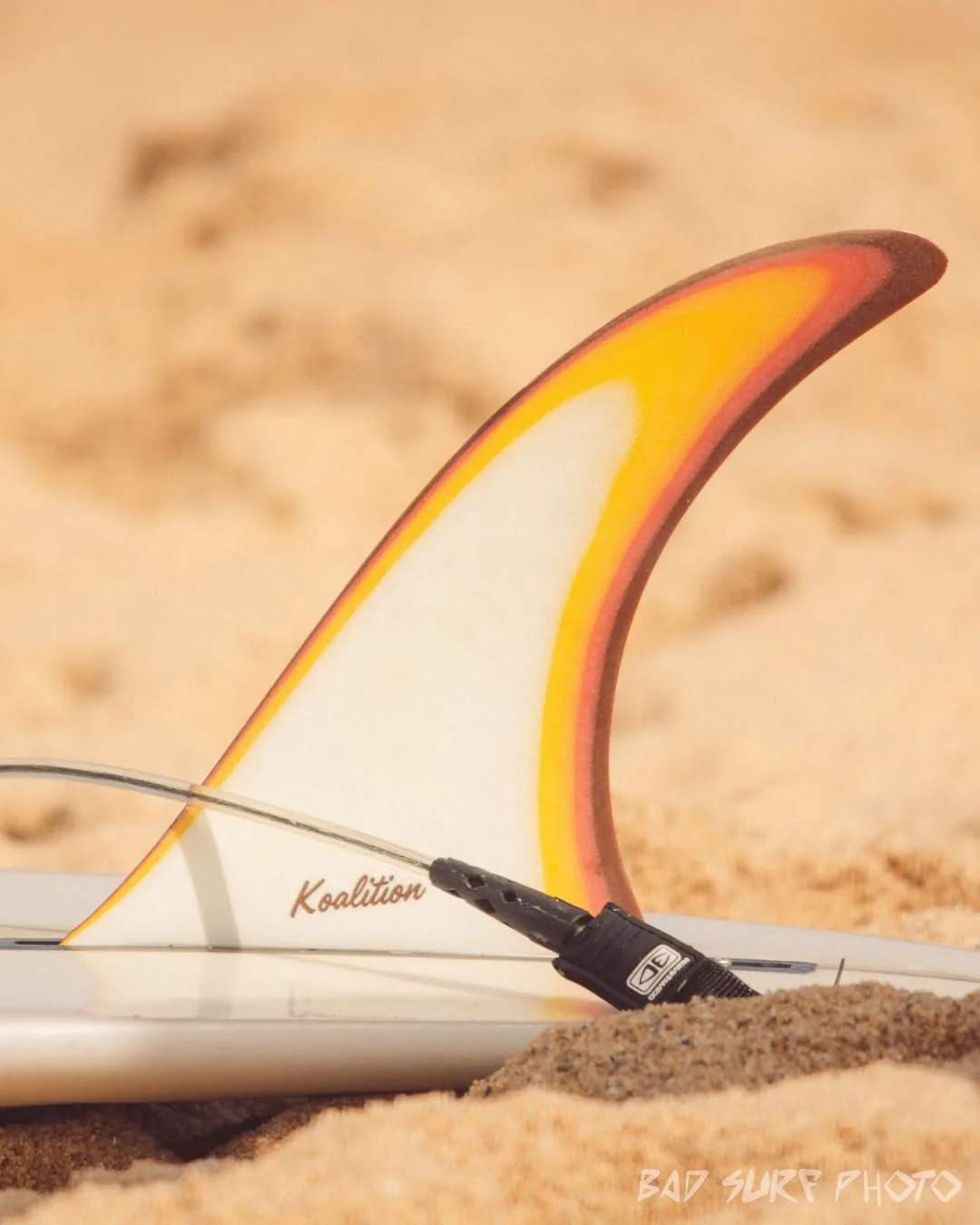
Check that the fin boxes are firm, with no play or cracks, and that the fins included fit well. The leash plug should also be solid. A leash that comes with the board is worth little and is better replaced with a new one: it is a safety item.

Examine the rails too, the side edges. That is where a board takes the most knocks and where wear shows most.

A fair price, without made-up numbers

There is no single price list. Compare adverts for similar boards in similar condition near you, and deduct what repairs will need. A board with no visible defects is worth more than one with recent, badly finished repairs. Be wary of prices far below normal with no clear reason.

If you can, bring someone who has bought boards before and, whenever possible, try the board in the water before agreeing a deal.

After you buy: watch it work

BAD SURF PHOTO only does photography and video: we do not sell or assess boards. But once you have bought one, a photo or video session is a good way to see whether it works for you: the paddling, your foot position, the way it sits on the wave.

Book on WhatsApp. Photo at €40 per hour and video at €50 per hour, plus VAT, with editing included and delivery within 48 hours.

Who it is for

How to buy a used surfboard without nasty surprises

Rails and surface

Run your hand around the whole outline: cracks and soft spots reveal wear or water entry.

Fins and plugs

Firm boxes with no play matter more than the shape of any fin.

Price by comparison

Compare similar adverts and deduct for repairs; without comparison there is no fair price.

FAQ

Quick questions.

How do I know if a used surfboard has water in it?

Look for yellowish patches, bubbles, soft areas when pressed and a damp smell. If the board feels heavy for its size, be suspicious.

Are repairs a bad sign?

Not necessarily. Neat, firm, smooth repairs are normal; the worry is repairs that are recent, badly finished or numerous.

Can I change the fins and the leash?

Yes, and replacing the leash with a new one is a good idea. The fins must be compatible with the board's fin boxes.

Book photo